
Hyundai IONIQ 3 The Small EV Undercutting Rivals
 Evan Simms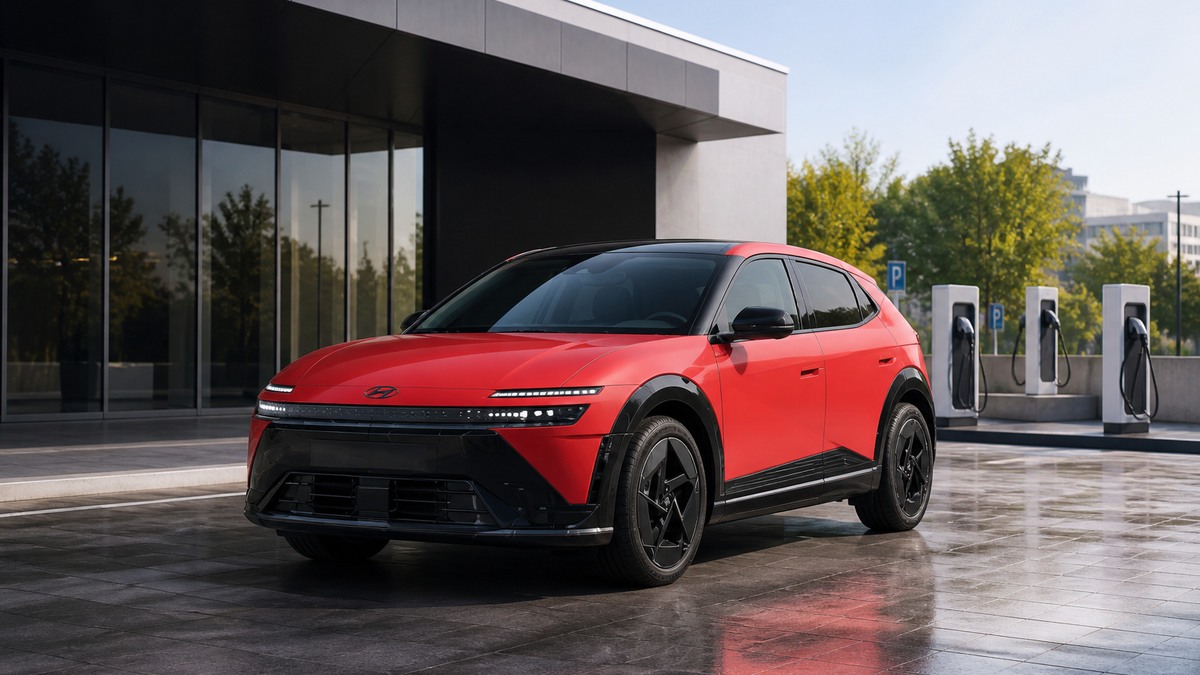
Hyundai just opened orders for the IONIQ 3, a compact electric hatch that starts at roughly $30,000 and slots in below the popular IONIQ 5. It’s small, sharp-looking, and packed with more range and tech than the price tag suggests.
- Base pricing lands around $30,000, with a longer-range version near $34,500.
- Range tops out at 308 miles on the larger 61 kWh battery.
- Orders are live in the UK and parts of Europe, with showroom cars due in late September.
A Little Sibling With Big Ambitions
The IONIQ 3 is Hyundai’s first compact EV in the IONIQ family, and it arrives with plenty of buzz behind it. The company says the car drew the highest level of early customer interest of any new Hyundai model, gas or electric. That’s a bold claim for a hatchback, but the numbers help explain the excitement. The entry Advance trim with the standard 42 kWh battery opens at about $29,800, which reads more like a well-equipped gas car than a modern electric one.
Step up to the 61 kWh battery and pricing starts near $34,500 for the Advance, climbs to roughly $37,000 for the Premium, and reaches about $40,000 for the Ultimate. The sportier N Line Evo tops the range at close to $42,700. In the Netherlands, buyers get six trims with a starting figure around $32,000, so the lineup shifts a bit depending on the market.
Range, Charging, and the Numbers That Matter
Battery choice decides how far you go. The standard 42 kWh pack is good for up to 213 miles on the WLTP cycle, while the 61 kWh pack stretches that to 308 miles. For a car this size and price, those are strong figures.
Charging is quick without being flashy. Rather than borrow the 800V system from the IONIQ 5, Hyundai went with a 400V architecture to keep costs down. Even so, a DC fast charger takes the smaller battery from 10 percent to 80 percent in about 29 minutes, and the bigger pack does it in roughly 30. You also get Plug and Charge, an EV route planner, and Vehicle-to-Load power, so the car can run your gear when the campsite has no outlets.
Design and Space in a Small Footprint
Hyundai gave the IONIQ 3 a new look it calls Art of Steel, wrapped around what the brand names the Aero Hatch shape. The result is a slippery 0.263 drag coefficient, which helps with efficiency and, by Hyundai’s telling, frees up room inside. At 163.5 inches long, the car is actually a touch smaller than the Kia EV3 and the old Chevy Bolt.
The clever part is how the cabin uses that space. There’s a Megabox underfloor storage bin and up to 441 liters of boot room, which Hyundai says leads the class. Inside, the IONIQ 3 debuts the Pleos Connect system in Europe and the UK. Built on Android Automotive OS, it behaves more like a smartphone, with apps and screens you can rearrange. Buyers pick a 12.9 or 14.6 inch center display, plus an optional driver screen and Hyundai’s Digital Key 2.
Where You Can Actually Buy One
Production kicked off at Hyundai’s Izmit plant in Turkey, which will build 30,000 IONIQ 3 units a year to start. Cars should reach showrooms in late September. If you’re shopping in the United States, though, this one stays out of reach. The IONIQ 3 is designed and built in Europe for European buyers, and current import tariffs would push the price too high to make sense here.
American shoppers still have options. Hyundai builds the IONIQ 5 in Georgia and prices it from about $35,000, and Kia’s new EV3 starts at $29,890 stateside. For anyone browsing a Hyundai for sale who wants an affordable EV, those two cover similar ground even if the IONIQ 3 itself never crosses the Atlantic.
Why This Little Hatch Turns Heads
The IONIQ 3 shows what a budget EV can look like when a company sweats the details. Strong range, honest charging times, thoughtful storage, and a fresh cabin all land under a price that feels reachable. European drivers get first dibs, and if the early interest holds up, Hyundai has a genuine hit on its hands.