
Solid-State Battery Hits the Road in a Dodge
 Evan Simms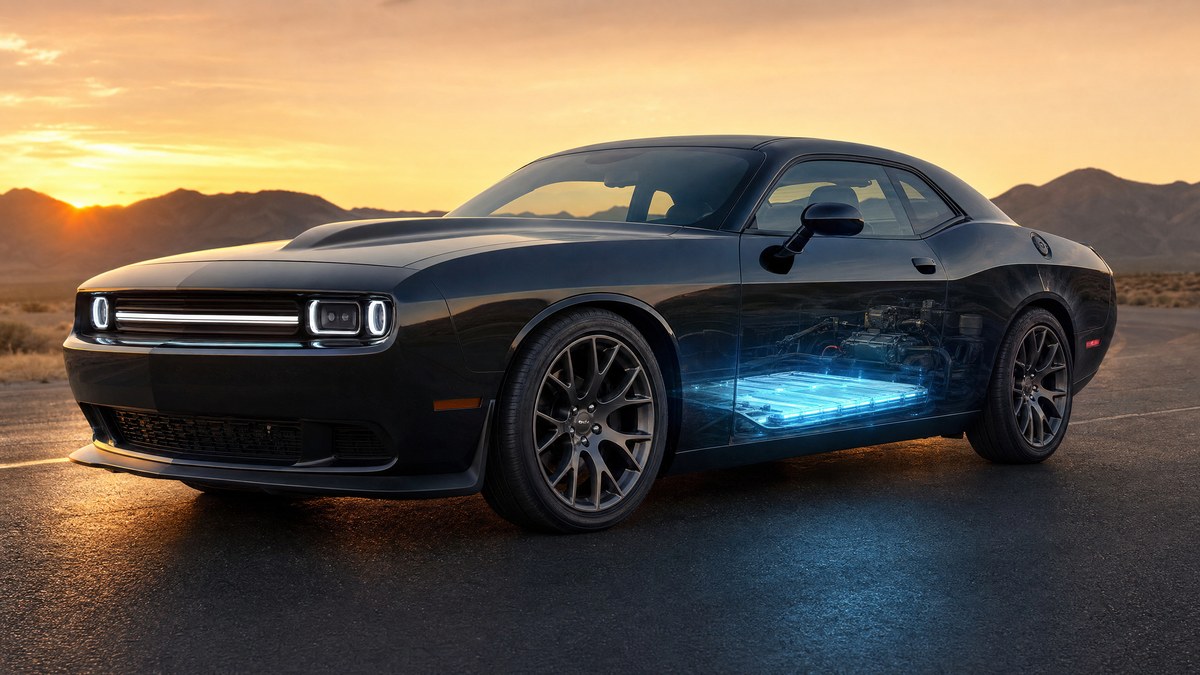
A Dodge Charger Daytona Becomes the Test Bed for Faster-Charging Solid-State Batteries
Solid-state batteries have spent years living in labs and slide decks, promised as the breakthrough that would finally fix slow charging and short range. Now one is bolted into a real car and driving on real roads, and the vehicle carrying it happens to be a Dodge Charger Daytona.
- Stellantis has fitted Factorial’s FEST cells into a Charger Daytona development vehicle and begun on-road testing.
- The cells charge from 15% to 90% in about 18 minutes and hit an energy density of 375 Wh/kg.
- No production date yet, but the move pushes the technology out of the lab and toward real EVs.
From Lab Bench to Public Roads
Stellantis has put Factorial Energy’s solid-state battery cells into a Dodge Charger Daytona development vehicle and begun road testing the technology, a key step toward bringing solid-state batteries into production cars. It’s the first time Factorial’s cells have been installed and tested in a Stellantis vehicle, which means the work has moved past validation rigs and into the messy, unpredictable world of everyday driving.
That distinction matters. Plenty of battery startups can post strong numbers in a controlled setting. Getting those cells to behave inside a moving vehicle, across hot days and freezing nights, is a much harder problem. Stellantis and Factorial say the road-testing program will verify performance, safety and reliability under real conditions.
The Numbers Worth Paying Attention To
The headline figures explain why people keep talking about this chemistry. During validation, the latest FEST cells reached an energy density of 375 Wh/kg, well above what most lithium-ion packs manage today. They also charged from 15% to 90% in just 18 minutes, the kind of speed that turns a long pit stop into a coffee break.
Cold and heat tend to be where batteries struggle, so the temperature results stand out too. The cells held up reliably from -30°C all the way to 45°C, covering deep winter mornings and scorching summer afternoons. Higher energy density usually points to more range from the same weight, while faster charging and steadier cold-weather behavior chip away at two of the biggest complaints drivers still have about EVs.
The Engineering That Made It Fit
Slotting experimental cells into a working car took more than dropping them into an old pack. Stellantis engineers built a new, patented mechanical architecture to house the FEST cells inside an existing battery pack design. The goal was to get the advantages of solid-state chemistry while still clearing the safety and durability bars that automotive use demands.
The team also reworked the battery management systems and pack controls so the cells perform consistently no matter the driving or charging scenario. Those software and control tweaks are the quiet part of the job, but they’re what keep a high-performance pack stable over thousands of miles.
Ned Curic, Stellantis Chief Engineering and Technology Officer, framed the work as a balancing act rather than a chase for one flashy spec. He said the milestone brings solid-state batteries closer to customers with the potential for longer range, faster charging, and lower costs. He also pointed out that FEST technology can work with existing lithium-ion manufacturing processes, which could make scaling up production far less painful.
What Comes Next for Stellantis EVs
With the car built, the focus shifts to gathering data. The calibration and testing program will study how the pack handles different driving conditions while watching charging behavior, thermal management, reliability, and overall vehicle safety. All of that feeds back into refining the technology before any talk of a commercial rollout.
Factorial CEO Siyu Huang called the project a real benchmark for automotive-grade solid-state development, noting the partnership covers everything from cell chemistry to pack architecture to vehicle testing. The advances coming out of these solid-state batteries could shape Stellantis’ electrification plans for years, even if the company hasn’t put a date on showroom availability.
For now, the takeaway is simple. A technology that’s been “almost ready” for a long time is finally racking up miles in a car you might recognize. If the testing holds up, the payoff could be EVs that go farther, charge quicker, and shrug off bad weather. And the proving ground for all of it is a Dodge that wears its muscle-car name proudly.