
BYD’s ETT 44 Wants to Solve Electric Trucking’s Biggest Headache
 Evan Simms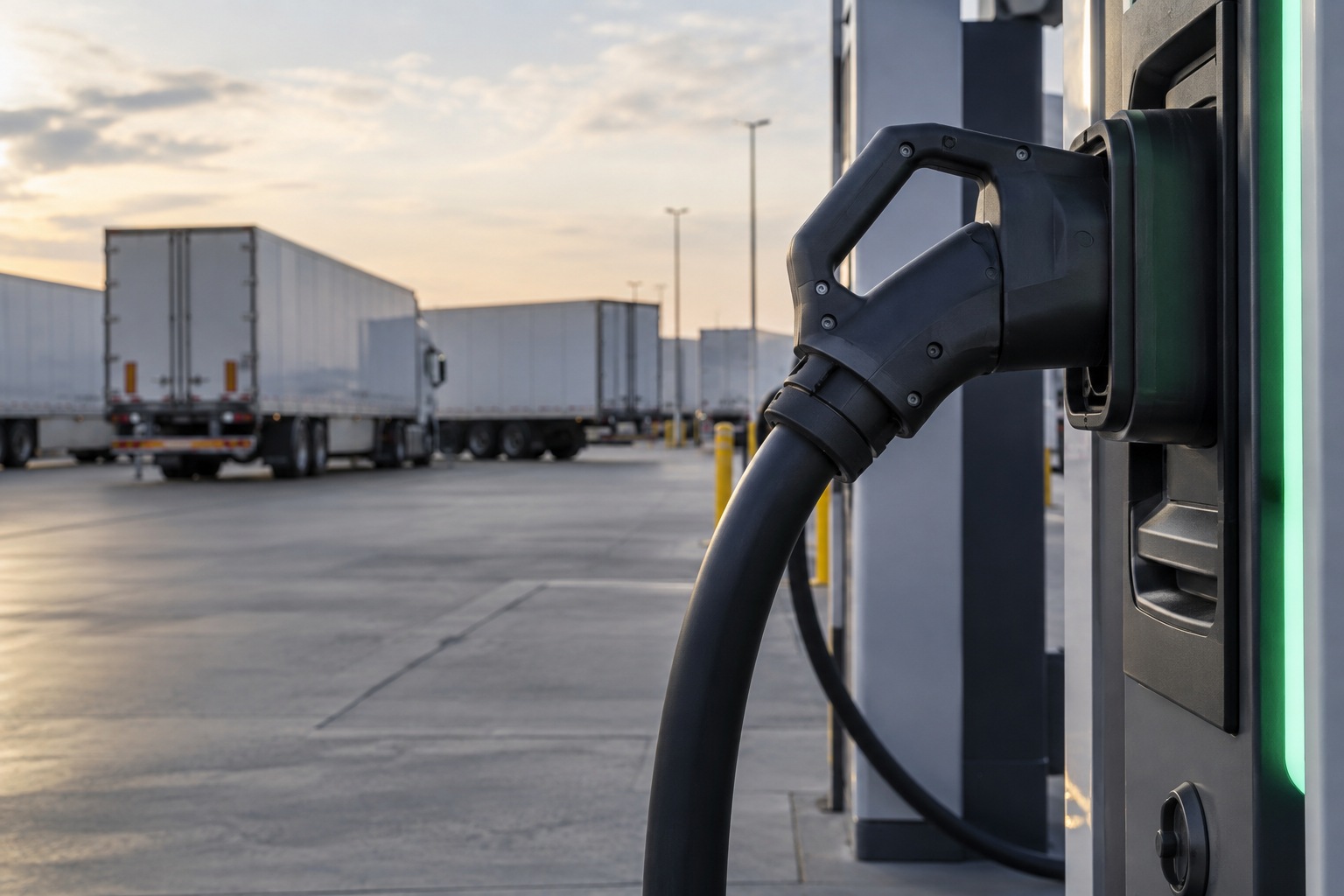
BYD just rolled out its ETT 44 electric tractor in Hannover, and the pitch is simple. Up to 600 km of range, plus charging fast enough that a heavy truck barely has to stop working to fill its battery.
- The ETT 44 is a 4×2 tractor for loads up to 44 tonnes, running a 651 kWh Blade Battery.
- Megawatt charging refills 20 to 80 percent in about 20 minutes, adding up to 400 km of range.
- BYD showed a full lineup from 3.5 to 44 tonnes, plus its own chargers, storage, and financing.
What the ETT 44 actually brings
BYD showed the ETT 44 at IAA Transportation 2026, and it sits at the top of the biggest commercial vehicle lineup the company has ever put in front of European buyers. The truck is a 4×2 tractor built for combinations weighing up to 44 tonnes, which is the sweet spot for long-haul freight across the continent.
Under the cab sits a 651 kWh Blade Battery on an 851V electrical architecture. BYD rates the powertrain at 743 PS, with peak output climbing to 1,000 PS. The company quotes up to 600 km of range on a charge, though real numbers will move around with payload, weather, and how the truck is driven. Backing all of it is a battery warranty good for 10 years or 1.2 million kilometers.
Charging is the whole story
Range gets the headlines, but the charging figures are where this truck earns attention. On a standard CCS2 DC charger, the ETT 44 pulls up to 420 kW and moves from 20 to 80 percent in about an hour. Plug it into BYD’s own Megawatt Charging System and it takes more than 1.5 MW, doing that same 20 to 80 percent jump in roughly 20 minutes. That single session can add as much as 400 km, or about 248 miles.
The math matters more for freight than for cars. A truck only makes money while it moves, so parking it at a charger for two hours breaks the business case. Cutting that stop to 20 minutes lines up neatly with a driver’s mandatory rest break, and that is the argument BYD is leaning on hardest.
A lineup, not a single truck
BYD didn’t stop at the flagship. The company also showed rigid 4×2 and 6×2 trucks, including 26-tonne swap body and hooklift versions, along with the E-Vali light commercial van and the EYT 2.0 electric yard tractor. Together the range now covers 3.5 to 44 tonnes, which handles most of what moves goods around a European city or a distribution yard.
The ETT 44 also ships with a full set of driver aids, from adaptive cruise and autonomous emergency braking to lane-keeping and blind-spot detection. BYD is selling the whole thing as a package it calls “Total Cost of Mobility,” bundling the vehicles with Blade batteries, megawatt chargers, stationary storage, energy management, and financing. The company says its commercial vehicles already run in more than 100 countries and 400-plus cities.
How it stacks up against the diesel giants
Europe is where the electric heavy-truck fight is really playing out. Daimler Truck’s eActros 600, Volvo’s FH Electric, Scania, and MAN are all pushing battery-electric tractors, and megawatt charging is the shared target they’re building toward. On paper, the ETT 44’s 600 km range and 1.5 MW charging land at or ahead of those trucks’ headline specs.
BYD’s edge is that it owns the charging side too. The company has been installing its 1,500 kW units at a pace nobody else matches, putting up 10,000 of them in five months and committing to 15,000 megawatt chargers across China. Fleet buyers care about uptime above all, and uptime comes down to whether a fast charger is actually there when the truck arrives. Legacy makers build fine trucks but lean on third parties for that network.
The catch worth watching
The open question isn’t the hardware. It’s politics. The EU has already put tariffs on Chinese-built EVs, and a Chinese company selling both the trucks and the charging backbone underneath them is exactly the kind of reliance Brussels has been wary of. Tesla is also bringing its Semi to Europe, so the competition is heating up on more than one front. BYD looks to have the more complete offer today. Whether regulators let European fleets buy the full stack is the part still up in the air, and it’s worth keeping an eye on as orders start to land.