
Hyundai Wants to Build a Midsize Pickup That Puts Families First
 Evan Simms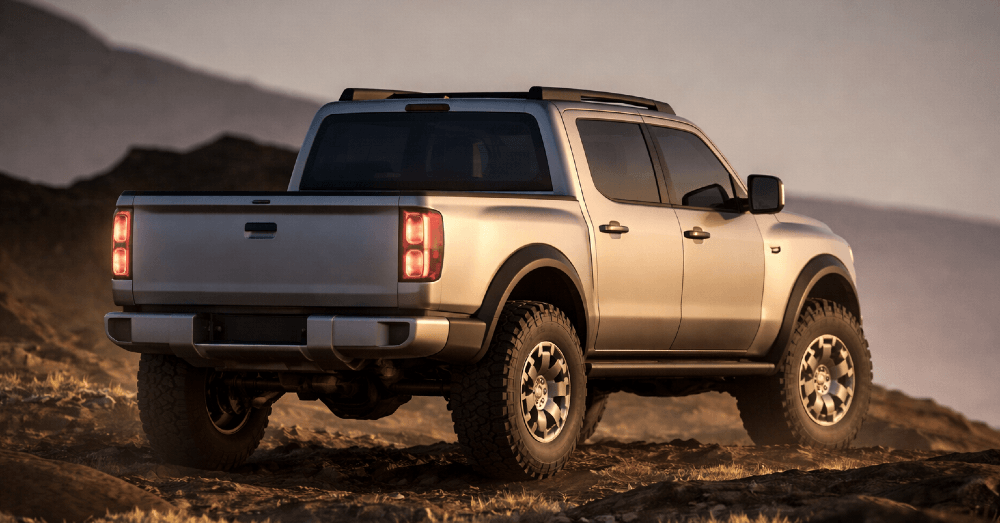
Hyundai is getting ready to shake up the midsize truck market with a pickup designed around comfort, fuel efficiency, and livable back-seat space. Building on lessons from the outgoing Santa Cruz, the Korean automaker is developing a body-on-frame midsize truck expected to arrive by 2030. And this time, the truck is designed with families in mind from the ground up.
- Hyundai sees clear gaps in today’s midsize truck segment and is focusing on comfort, efficiency, and day-to-day usability in its upcoming pickup.
- Lessons learned from the Hyundai Santa Cruz will play a big role in shaping the new truck’s direction.
- A production midsize truck built on a new body-on-frame platform is confirmed for the U.S. market by 2030, and it will be designed, developed, and manufactured in the United States using Hyundai-produced U.S. steel.
What Hyundai Learned from the Santa Cruz
The Santa Cruz was always a bit of an experiment. The vehicle is based on the Tucson crossover SUV and uses a unibody chassis design, and industry analysts expected it to attract car or crossover SUV buyers instead of people who have owned a larger, traditional pickup truck. It found a niche audience, but Hyundai is reportedly discontinuing production of the Santa Cruz in 2026.
Still, the Santa Cruz taught Hyundai plenty. The makers of the outgoing Santa Cruz think that the midsize pickup truck segment is lacking in a few important areas, and Olabisi Boyle, Hyundai Motor America’s vice president of product planning and mobility solutions, told The Drive that Hyundai has learned a lot from the compact Santa Cruz.
One of the biggest takeaways? Back-seat riders matter. Boyle noted that buyers like interior comfort in all rows, including the second row, and while that might seem small, it’s important since a good majority of midsize pickup trucks are crew cab, meaning they seat up to five. If you’ve ever been stuck in the back of a Tacoma or a Colorado on a road trip, you know that the second row can feel like an afterthought. Hyundai may be fitting a rear bench that is actually livable in its upcoming midsize truck.
A Real Truck on a Real Frame
The biggest shift from the Santa Cruz is what’s underneath. The Hyundai Boulder Concept sport utility vehicle made its surprise global debut at the 2026 New York International Auto Show, and this SUV design study previews the brand’s first fully-boxed body-on-frame architecture, a new platform confirmed to underpin a production midsize pickup arriving by 2030.
That body-on-frame setup is a big deal. Ladder-frame-style construction has long been favored by U.S. consumers seeking trucks and SUVs capable of serious off-roading, towing, and hauling, and this is the type of underpinning found in the Toyota 4Runner, Ford Bronco, and Jeep Wrangler. So Hyundai isn’t trying to sneak a crossover into the truck market this time around. The new pickup will go toe-to-toe with the Ford Ranger, Toyota Tacoma, Chevrolet Colorado, and Nissan Frontier with the rugged bones to back it up.
Hyundai is doubling down on its U.S. operations, and the brand officially confirmed that these future body-on-frame vehicles will be designed in America, developed for America, and built in America using Hyundai’s own U.S. steel. Any Hyundai mechanic or dealership technician working on these trucks will be servicing a genuinely American-made product.
Powertrain Choices and Fuel Efficiency
Gas prices aren’t getting cheaper, and truck shoppers have noticed. Fuel prices remain high, and fuel efficiency has risen to the top of the list for many new car buyers, with hybrids and fully electric vehicles getting more attention.
Hybrid pickups have entered the consumer sphere, and Hyundai has plenty of powertrains to choose from to meet consumer wants and needs. Think turbocharged four-cylinders, hybrids, extended-range electric setups, and possibly a fully electric option. The midsize truck segment has turned to turbocharged 4-cylinder engines as the powerplant of choice, and a turbo-4, possibly with a hybrid option, seems the most likely candidate to power Hyundai’s pickup.
Hyundai’s VP Boyle noted the idea is to listen to the customer in the mid-size truck market and figure out whether they care about efficiency over towing, or towing over fuel economy. That kind of flexibility could give Hyundai an edge over brands locked into one or two engine options per model.
Physical Buttons Are Staying Put
Touchscreen fatigue is real, and Hyundai seems to get it. One welcome detail about the new Hyundai midsize will be buttons, and Hyundai has previously made clear its stance on keeping physical controls. Truck buyers use their vehicles with gloves, dirty hands, and quick glances between the dashboard and the road. Touchscreens don’t always cooperate under those conditions.
Advanced driver-assist features are more or less standard on any top-of-the-line pickup truck nowadays, and Hyundai will be able to match that as well. So expect a modern cabin with strong tech, but with the tactile controls that make everyday driving easier.
Can Hyundai Compete with Tacoma and Ranger?
This is the million-dollar question. Toyota’s Tacoma alone held 39 percent of the midsize segment in 2019 and increased its share to 42 percent in recent years, which tells you just how firmly the hierarchy is set. History has shown that it’s exceedingly difficult for foreign automakers to get a foothold in the U.S. truck market, full-size or otherwise.
But Hyundai has a plan: build a truck that families actually enjoy riding in, offer powertrain flexibility that competitors don’t, and price it to compete. The body-on-frame truck is one of 36 new Hyundai vehicles coming to North America by 2030, and the brand is entering segments it has never competed in before. If they get it right, this could be a truck that gets people off the fence who’ve been eyeing a Tacoma but wishing for a more comfortable ride and better fuel economy.
The new Hyundai midsize pickup won’t arrive overnight, but everything we’re hearing suggests the wait could be worth it.