
Hyundai and Kia Are Betting Big on NVIDIA to Build Their Self-Driving Future
 Evan Simms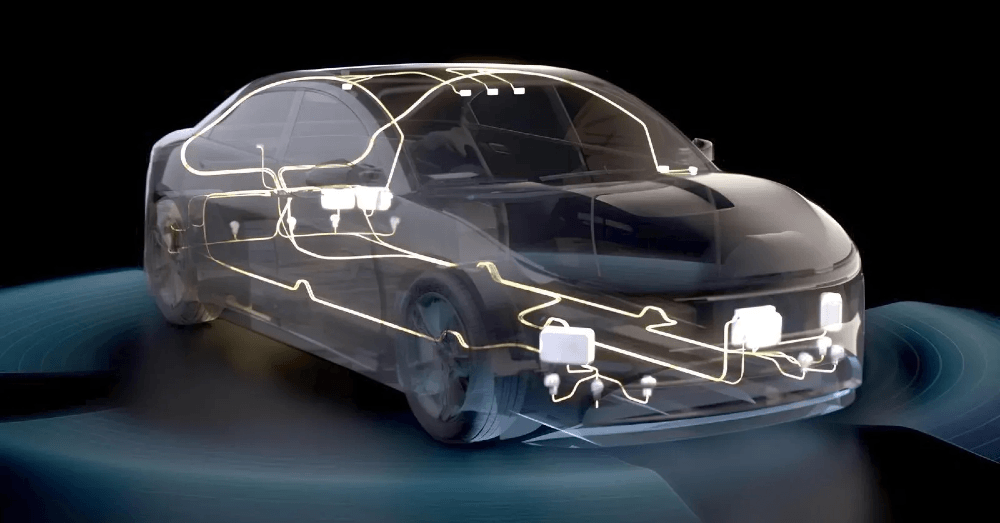
Hyundai Motor Company and Kia just made a major move in the autonomous driving race. The two Korean automakers announced an expanded partnership with NVIDIA on March 16, 2026, during NVIDIA’s annual GTC conference. The goal? Build a unified self-driving system that can go from everyday driver assistance all the way up to fully autonomous robotaxis.
- The expanded partnership includes Level 2+ deployment across select vehicles and Level 4 robotaxi development through Motional.
- Hyundai Motor Group will build on the NVIDIA DRIVE Hyperion platform to speed up development of autonomous driving systems trained on real-world data.
- Earlier this year, Hyundai hired former Tesla engineer Minwoo Park, one of the architects of Tesla’s Autopilot system, to lead its Advanced Vehicle Platform Division.
What NVIDIA DRIVE Hyperion Brings to Hyundai and Kia
At the center of this deal is NVIDIA’s DRIVE Hyperion platform. It’s a production-ready autonomous driving platform and reference architecture that combines a standardized vehicle sensor suite, high-performance processor, and software stack supporting over-the-air updates. That means Hyundai can introduce new features and improve performance for the entire life of a vehicle without asking owners to visit a service center.
The platform supports up to 14 cameras, 12 ultrasonic sensors, nine radar units, one lidar, four interior cameras, and an array of external microphones for autonomous driving. That’s a serious sensor array, and it gives Hyundai and Kia vehicles the hardware foundation they need to collect massive amounts of real-world driving data.
The collaboration will allow Hyundai Motor Group to develop an autonomous driving stack built on NVIDIA DRIVE Hyperion that works across a range of vehicles and capability levels, from advanced driver assistance all the way to Level 4 autonomy. In practical terms, this means shoppers browsing used cars for sale from Hyundai and Kia will increasingly find models equipped with advanced driver-assist features that keep getting smarter over time through software updates.
How the Data Cycle Works
By combining Hyundai Motor Group’s fleet data and software-defined vehicle development with NVIDIA’s AI computing platform, the companies plan to build a continuous development cycle. That cycle includes real-world driving data collection, AI model training and refinement, simulation, validation, and deployment across production vehicles.
Think of it this way: every Hyundai and Kia vehicle equipped with this system becomes a rolling data collector. The cars log driving conditions, road scenarios, and traffic patterns while owners go about their daily commutes. The Hyperion platform supports the training of AI models using continuous data collection from vehicles in real-world environments. That data can then be used to improve Hyundai’s autonomous technology over time and push updates to all equipped vehicles over the air.
Hyundai can also use the data to develop its own proprietary AI models. That’s a big deal because it means the automaker is building in-house AI know-how on top of NVIDIA’s platform, giving them more control over how their systems evolve.
Motional and the Level 4 Robotaxi Push
The partnership extends well beyond consumer vehicles. The companies are working on Level 4 robotaxi development and next-generation mobility services through Motional, a joint venture between Hyundai Motor Group and Aptiv. Level 4 means the vehicle can handle all driving tasks without human input in specific conditions or areas.
No vehicles on sale to consumers today can drive themselves without human monitoring or intervention, but some companies, such as Alphabet’s Waymo, offer ride-hailing fleets with Level 4 self-driving vehicles, also known as robotaxis. Hyundai wants in on that market, and NVIDIA’s platform gives them the tools to compete.
The expanded partnership comes as NVIDIA broadens its automotive reach with multiple new agreements this week, including additional partnerships with Nissan, Isuzu, and Chinese automakers BYD and Geely for its Drive Hyperion platform. NVIDIA is clearly positioning itself as the backbone of the autonomous driving industry, and Hyundai is one of its biggest bets.
Hyundai’s Internal Moves Signal Serious Commitment
To prepare for the launch of future software-defined vehicles, Hyundai Motor and Kia established a new “Advanced Vehicle Platform Division” in January 2024. This consolidated the company’s software-defined vehicle division with its mobility engineering and technology acceleration units.
Earlier this year, Hyundai hired former Tesla engineer Minwoo Park as head of that division. Park was one of the architects of Tesla’s Autopilot self-driving system. Bringing in someone with that background shows Hyundai isn’t treating this as a side project.
As the auto industry shifts toward software-defined vehicles, ADAS and autonomous driving systems are increasingly seen as must-have vehicle technologies, according to Omdia’s 2025 Software-Defined Vehicle survey. Automakers that offer their customers higher levels of automated driving are in the best near-term position to win over buyers, according to PricewaterhouseCoopers.
Where This Leaves Hyundai and Kia Drivers
For everyday Hyundai and Kia owners, the partnership translates to vehicles that will get better at driving assistance over time. New features can arrive through over-the-air updates without a trip to the dealership. And for anyone interested in autonomous mobility services, the Motional robotaxi program could bring driverless rides to cities in the near future.
The auto industry is moving fast, and this NVIDIA partnership puts Hyundai Motor Group in a good spot to keep pace. With a strong hardware platform, a growing data pipeline, and a team that includes talent from companies like Tesla, Hyundai and Kia are actively building the road ahead.